
Your cart is empty
Continue Shopping → Commercial Buying Guides
2/10/2026 • By Dalux Lighting Team • 10 min read
Downlights vs Linear Lighting: Which is Best for Workspaces and Shops?
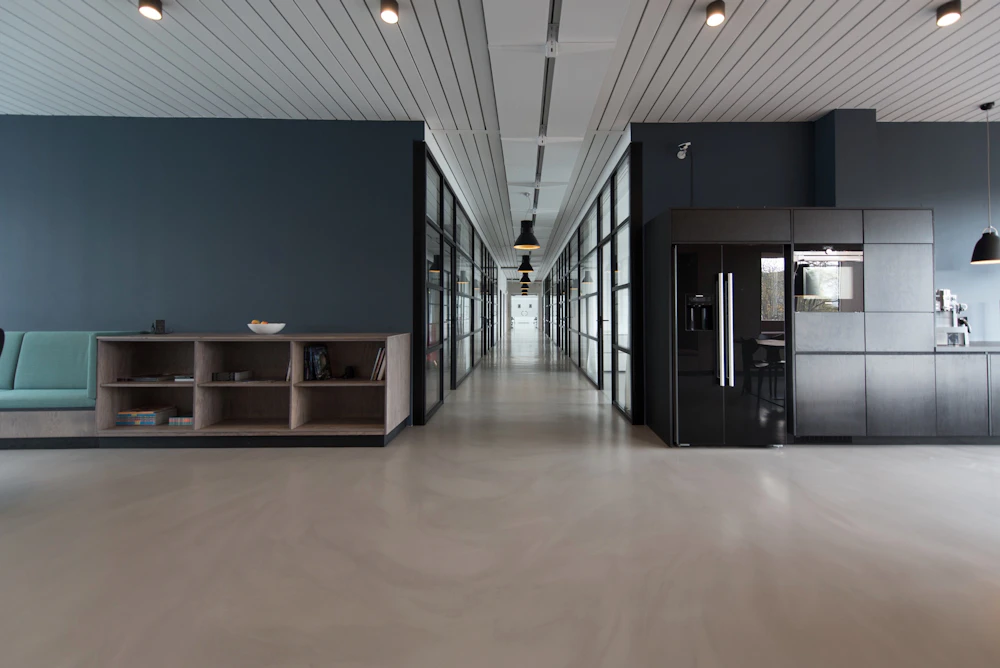
Downlights vs Linear Lighting: The Definitive Guide for Workspaces and Shops
Choosing the right lighting layout for a commercial space is one of the most impactful decisions you’ll make during a fit-out. The two dominant approaches — recessed downlights and linear lighting — each bring distinct advantages, and picking the wrong one can result in wasted energy, uncomfortable glare, and even reduced productivity.
In this guide, we break down everything you need to know to make the right choice for your workspace, retail store, or showroom.
lightbulb Understanding the Two Approaches
What Are Downlights?
Downlights (also called recessed lights or pot lights) are individual fixtures installed into the ceiling, casting light directly downward in a cone-shaped beam. They create pools of focused light and are one of the most common commercial lighting solutions worldwide.
Key characteristics:
- arrow_right Individual point-source fixtures
- arrow_right Recessed into the ceiling for a clean look
- arrow_right Available in fixed or adjustable (gimbal) versions
- arrow_right Beam angles typically range from 15° (spot) to 60° (flood)
- arrow_right Wattages from 5W to 40W+ per fixture
What Is Linear Lighting?
Linear lighting uses elongated fixtures — either LED panels, suspended linear profiles, or aluminium channel strips — to create continuous lines of light. Rather than individual pools, linear fixtures produce uniform, even illumination across an entire surface.
Key characteristics:
- arrow_right Continuous or near-continuous light output
- arrow_right Available as recessed, surface-mounted, or suspended
- arrow_right Uses LED strips inside aluminium profiles or integrated panels
- arrow_right Lengths from 0.6m to custom runs of 10m+
- arrow_right Wattages from 10W/m to 25W/m
compare Head-to-Head Comparison
1. Light Distribution & Uniformity
Linear lighting wins for general illumination.
Linear fixtures spread light evenly across the entire workspace. There are no dark spots between fixtures, and the uniformity ratio (minimum to maximum lux across a surface) is significantly better.
-
Linear lighting uniformity ratio: typically 0.7–0.8
- Excellent for open-plan offices where every desk needs equal light
- Eliminates the “cave effect” between fixtures
- Better for video calls — even facial illumination
-
Downlight uniformity ratio: typically 0.4–0.6
- Creates distinct bright and dark zones
- Acceptable when spacing is tight (1:1 ratio of spacing to ceiling height)
- Can feel dramatic rather than uniform
tips_and_updates Pro tip: For open-plan offices where employees may sit anywhere, linear lighting eliminates the problem of desks falling between downlight pools.
2. Glare Control
Downlights have a higher glare risk, but it depends on the fixture.
-
Downlights:
- Direct downward beam can cause veiling reflections on computer screens
- High-quality downlights use deep recessed baffles (UGR < 19) to control this
- Adjustable downlights can be aimed away from screens
- Budget downlights are the worst offenders for office glare
-
Linear lighting:
- Larger luminous surface means lower luminance (brightness per area)
- Easier to achieve UGR < 19 (the standard for computer work)
- Microprismatic diffusers virtually eliminate direct glare
- Suspended linear fixtures with up/down light provide the best glare control
assignment UGR (Unified Glare Rating) should be below 19 for offices with computer screens. Always check this specification before purchasing.
3. Aesthetics & Design Impact
This one comes down to the look you want.
-
Downlights create a clean, minimal ceiling:
- The ceiling appears uncluttered — just small circles
- Best for spaces where the ceiling should “disappear”
- Ideal for retail where you want attention on products, not fixtures
- Creates a more traditional, conservative aesthetic
-
Linear lighting makes an architectural statement:
- Lines of light become a design feature themselves
- Can define zones, guide circulation, or create rhythm
- Suspended linear fixtures add a “floating” modern aesthetic
- Perfect for contemporary offices, showrooms, and tech companies
4. Energy Efficiency
Linear lighting is generally more efficient for the same lux level.
-
Why?
- Linear fixtures distribute light more evenly, so you need fewer total lumens
- Less light is wasted illuminating areas between fixtures
- Higher system efficacy (lumens per watt) in modern linear LED fixtures
- Typical energy savings: 15–25% less power for equivalent lux levels
-
Comparison for a 100m² office (target: 500 lux):
- Downlights: ~20 fixtures × 25W = 500W total
- Linear lighting: ~6 fixtures × 60W = 360W total
- Annual savings at 10 hours/day: ~500 kWh
5. Installation & Maintenance
-
Downlights:
- Each fixture needs a separate ceiling cut-out
- More wiring points and junction boxes
- Individual fixture replacement is easy — swap one at a time
- Easier to add more lights later if needed
-
Linear lighting:
- Fewer mounting points needed
- Faster installation time overall
- If one section fails, the entire run may be affected
- Requires careful alignment for a professional finish
6. Cost Comparison
| Factor | Downlights | Linear Lighting |
|---|---|---|
| Fixture cost per m² | Lower initial cost | Higher initial cost |
| Installation labor | More fixtures = more time | Fewer fixtures = less time |
| Energy cost (ongoing) | Higher | Lower |
| Maintenance cost | Easy individual replacement | Module replacement |
| 5-year total cost | Often higher | Often lower |
store Best Choice by Space Type
Retail Shops & Showrooms
Recommended: Downlights (primary) + Linear accents
Retail environments benefit from the drama that downlights create. Focused beams highlight merchandise, create visual hierarchy, and draw the eye to displays.
-
Product display areas: Adjustable downlights (15–24° beam) aimed at shelving
- Use high-CRI (95+) fixtures so clothing and product colors look accurate
- Track lighting is an excellent alternative for flexibility
-
General floor area: Wider beam downlights (36–60°) for ambient light
- Target 300–500 lux on the shop floor
- Even spacing at 1.5m intervals for good uniformity
-
Feature walls and signage: Linear lighting for accent
- LED strips in aluminium profiles create clean wall-wash effects
- Backlit shelving adds perceived value to products
-
Checkout area: Bright, even illumination (linear or closely-spaced downlights)
- Customers need to see clearly when making purchasing decisions
- 500+ lux recommended
storefront Retail golden rule: Use at least 3 layers of light — ambient (general), accent (highlighting), and task (checkout/counter). Downlights handle accent beautifully; linear handles ambient efficiently.
Open-Plan Offices
Recommended: Linear lighting (primary)
Modern offices with hot-desking, open floor plans, and extensive screen use benefit enormously from linear lighting.
-
Workstation areas:
- Suspended linear fixtures at 500 lux on the desk surface
- UGR < 19 is mandatory for screen-based work
- 4000K color temperature for alertness without harshness
-
Meeting rooms:
- Dimmable linear panels or suspended fixtures
- Consider tunable white (3000K–5000K) for different meeting types
- Supplement with wall-washing for presentation walls
-
Breakout and lounge areas:
- Switch to 3000K warm white
- Lower lux levels (200–300 lux) for a relaxed feel
- Pendant downlights over tables add a residential touch
-
Corridors and circulation:
- Continuous linear runs guide movement through the space
- 150–200 lux is sufficient
- Motion sensors to dim when unoccupied (saves 30–40% energy)
Small Shops & Boutiques (Under 50m²)
Recommended: Downlights throughout
For smaller spaces, the simplicity and flexibility of downlights wins:
- Lower upfront cost for smaller areas
- Easier to adjust and aim at specific displays
- A grid of 8–12 downlights covers most small shops effectively
- Add 1–2 linear accent pieces for visual interest
Warehouses & Large Commercial Spaces
Recommended: Linear high-bay lighting
For spaces with high ceilings (4m+):
- Linear high-bay fixtures provide the most efficient lumen output
- Fewer fixtures needed compared to individual high-bay downlights
- Easier to maintain with continuous runs
- Motion-controlled zones reduce energy waste significantly
tips_and_updates The Hybrid Approach: Best of Both Worlds
The most effective commercial lighting schemes almost always combine both types. Here’s a proven formula:
-
Start with linear lighting for base illumination
- Calculate the lux level needed for the space function
- Lay out linear fixtures to achieve uniform ambient light
- This becomes your “foundation layer”
-
Add downlights for accent and task lighting
- Place adjustable downlights to highlight key features
- Use narrow beam angles (15–24°) for drama
- These create the visual interest layer
-
Use LED strip profiles for architectural accents
- Cove lighting around ceiling edges
- Under-shelf illumination in retail
- Wall-wash effects for texture and depth
-
Layer in controls
- Zone the space so different areas can be dimmed independently
- Use daylight sensors near windows
- Occupancy sensors in low-traffic areas
checklist Quick Decision Framework
Ask yourself these questions:
- check_circle Do you need even, uniform light everywhere? → Linear lighting
- check_circle Do you want to highlight specific products or areas? → Downlights
- check_circle Is the space used primarily for screen work? → Linear (lower glare)
- check_circle Do you need maximum flexibility for changing displays? → Track-mounted downlights
- check_circle Is energy efficiency the top priority? → Linear lighting
- check_circle Is the space small with a tight budget? → Downlights
- check_circle Do you want a modern, architectural look? → Suspended linear
- check_circle Is the ceiling a dropped/false ceiling? → Either works well
Final Thoughts
There’s no single “right answer” — the best lighting for your workspace or shop depends on the specific activities, aesthetic goals, and budget. However, the trend in modern commercial design is clearly moving toward linear lighting as the primary source, supplemented by downlights for accent and drama.
If you’re fitting out a new space or upgrading from old fluorescent tubes, linear LED fixtures will give you the best combination of efficiency, comfort, and contemporary style. For retail environments, keep downlights in your toolkit for their unmatched ability to make products shine.
At Dalux Lighting, we stock both premium downlights and linear LED solutions designed for Sri Lankan commercial environments. Browse our collection to find the perfect combination for your project.